 Fluxx Tech
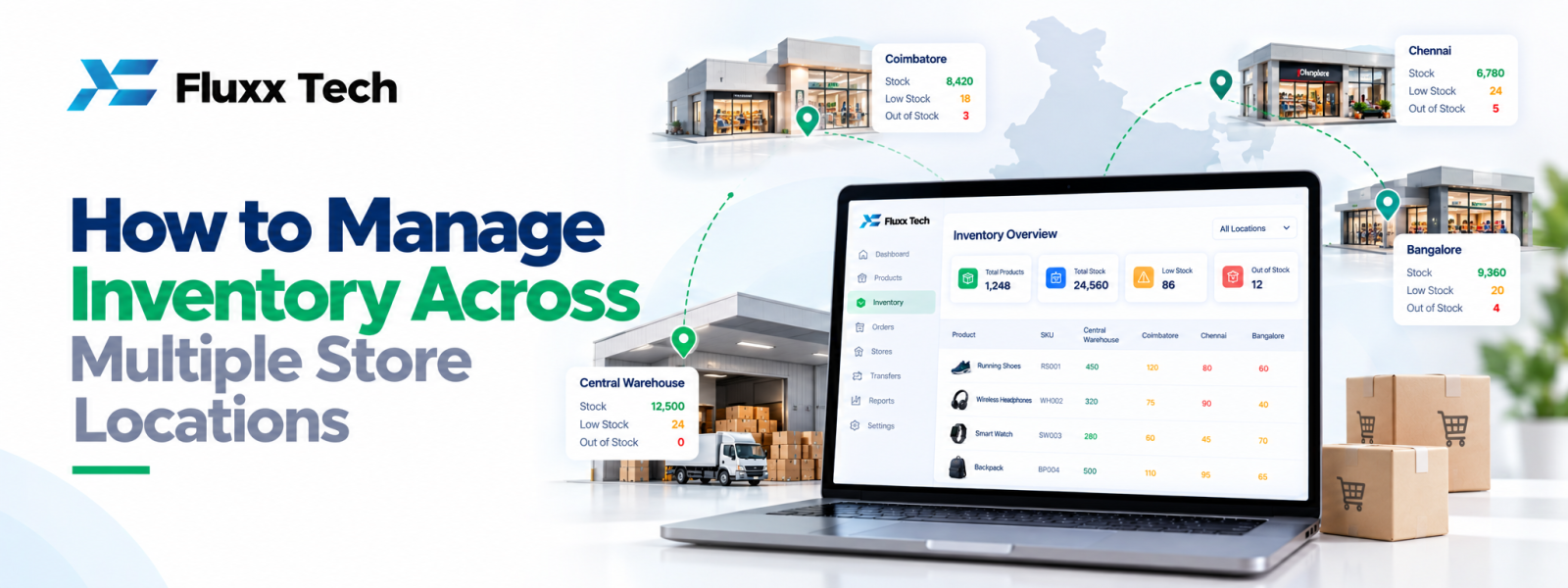
Multi store inventory management helps businesses know what is available at each branch and which location can fulfil an order. It becomes especially important when online and in-store sales draw from shared stock.
Define the business requirements
Use consistent product names, SKUs, units and variants across locations. Duplicate records make stock comparison and reporting unreliable.
Build the core workflow
Record available, reserved, damaged and in-transit quantities where supported. Define a process for receiving stock, sales, returns and physical counts.
Connect operations and technology
Inventory synchronisation should connect website orders with branch stock. Test simultaneous purchases for the last item and decide how the business handles delayed updates or overselling risk.
Make the customer experience reliable
Record transfers with source, destination, quantity, dispatch and receipt confirmation. Define who approves transfers and how discrepancies are investigated.
Measure performance and improve
Set replenishment rules based on sales, lead times and seasonality. Track stockouts, excess inventory, transfer delays and fulfilment accuracy to find recurring problems.
Conclusion
In conclusion, multi store inventory management should support a clear business need and a dependable customer experience. Start with the essential workflow, test it with real users and verify that product, order and operational information stays accurate. Use customer feedback and measurable results to prioritise improvements, and add complexity only when the business is ready to maintain it.
Frequently Asked Questions
What should a business consider when choosing multi store inventory management?
Start with the business model, customer needs, operational workflows, integrations, security and total ongoing cost. Test important scenarios before committing.
Should every business build all features at launch?
No. Begin with essential customer and admin workflows, then add features when feedback and operational data show a clear need.
What should be checked before publishing or launching?
Verify real platform capabilities, current provider or regulatory requirements, customer communication, payment states and support processes.