 Fluxx Tech
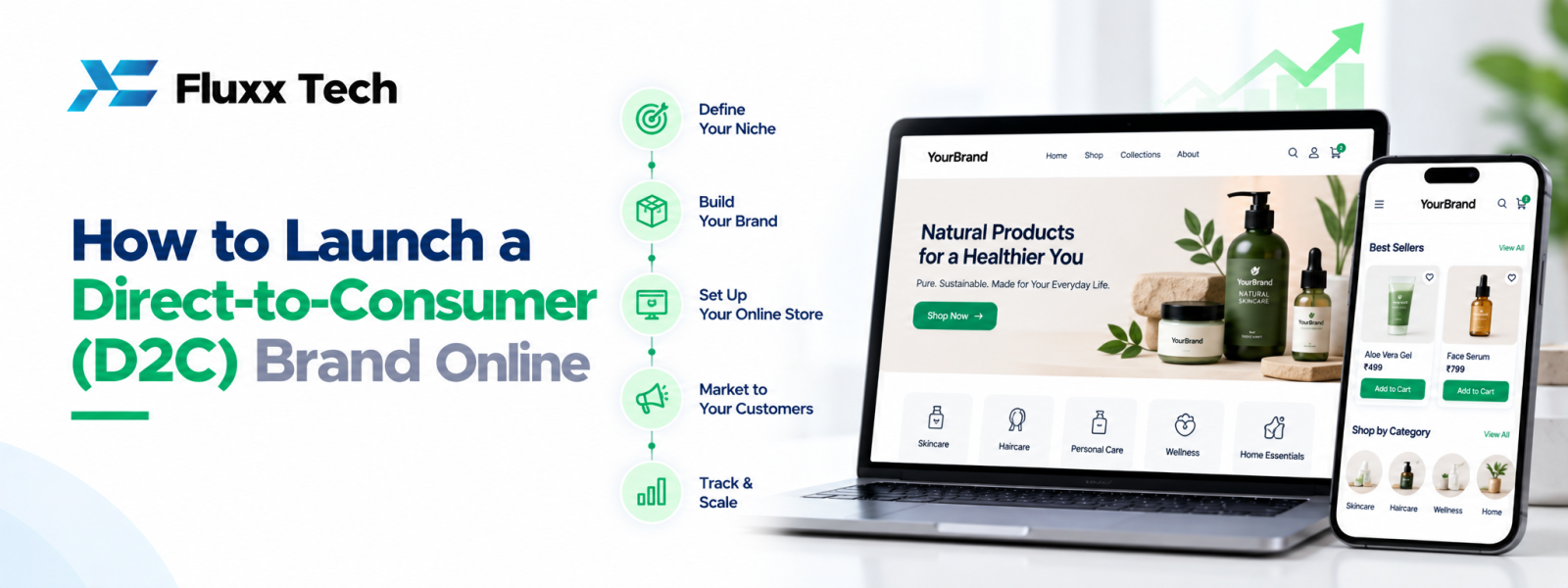
A D2C ecommerce platform helps a brand sell directly to customers through its own digital channel. The website needs to communicate the brand's value, make products easy to understand and connect checkout with dependable fulfilment.
Define the business requirements
Identify the customer, their problem and why the product is different. Validate the offer with customer conversations or a small launch before investing heavily in traffic.
Build the core workflow
Prepare stock, packaging, delivery coverage, return handling and product margins. Include payment fees, shipping, returns and marketing in the cost calculation rather than looking only at sales revenue.
Connect operations and technology
Build a direct to consumer website with accurate product pages, clear policies, contact information and mobile-friendly checkout. Explain delivery expectations and make support easy to reach.
Make the customer experience reliable
Use useful product education, demonstrations and relevant social content to attract the first buyers. Test paid campaigns with a defined budget and measure purchases, not only clicks.
Measure performance and improve
After purchase, provide helpful updates and responsive support. Use consent-based communication and relevant reminders, bundles or subscriptions only when they suit the product and customer.
Conclusion
In conclusion, D2C ecommerce platform should support a clear business need and a dependable customer experience. Start with the essential workflow, test it with real users and verify that product, order and operational information stays accurate. Use customer feedback and measurable results to prioritise improvements, and add complexity only when the business is ready to maintain it.
Frequently Asked Questions
What should a business consider when choosing D2C ecommerce platform?
Start with the business model, customer needs, operational workflows, integrations, security and total ongoing cost. Test important scenarios before committing.
Should every business build all features at launch?
No. Begin with essential customer and admin workflows, then add features when feedback and operational data show a clear need.
What should be checked before publishing or launching?
Verify real platform capabilities, current provider or regulatory requirements, customer communication, payment states and support processes.