 Fluxx Tech
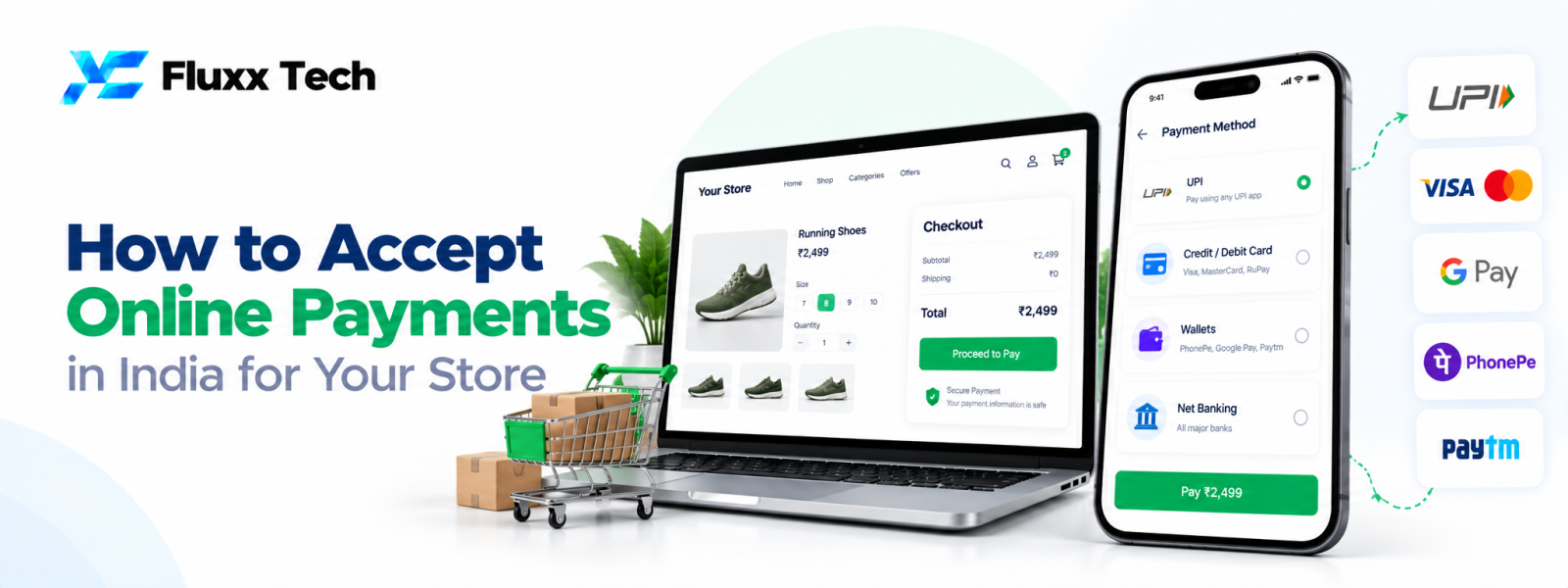
To accept online payments in India, a store needs a payment setup that is secure, convenient for customers and compatible with its order workflow. Common options may include UPI, cards, net banking and supported wallets, depending on the provider and merchant eligibility. Before choosing a gateway, compare the available methods, fees, settlement process and integration requirements.
1. Choose the payment methods your customers use
Review your audience and average order value to decide which payment options to offer. UPI can be convenient for many mobile-first customers, while cards and net banking may matter for other customer groups or transaction types.
Do not add payment methods simply to make the checkout look comprehensive. Each method should be supported reliably, display clear status information and fit your customer base.
2. Compare payment gateway providers
Compare supported payment methods, onboarding requirements, integration options, transaction fees, settlement timing, refund processes, dispute handling and support availability. Ask how the provider handles pending or failed transactions.
Razorpay is one example of a payment gateway provider in India, but suitability depends on current terms, eligibility and technical requirements. Review the provider's official documentation and current pricing before making a decision.
3. Prepare merchant and website information
Payment providers may ask for business, bank, identity, website and product information during onboarding. Requirements can vary by business type and provider, so follow the current official checklist.
Your website should clearly describe what you sell, provide valid contact details and display appropriate shipping, refund, cancellation and privacy information. Make sure the information is accurate and consistent.
4. Integrate checkout safely
Use the provider's supported integration or SDK and follow its official technical documentation. Do not collect or store sensitive payment credentials yourself unless you are specifically authorised and equipped to meet the applicable requirements.
Keep secrets on the server, validate payment status server-side and verify webhooks according to the provider's instructions. A success message shown in the browser alone should not be treated as proof that an order has been paid.
5. Handle pending, failed and duplicate payments
Payment states are not always immediate. A transaction may remain pending, fail after a customer returns to the store, or be reported through a later webhook. The order system needs a clear way to reconcile these cases.
Use unique order and transaction references, make status updates idempotent where appropriate, and provide customers with a clear next step. Avoid asking customers to pay again until the original transaction state has been checked.
6. Test refunds and settlement
Test successful payments, failures, cancellations, refunds and webhook delivery in the provider's test environment before launch. Confirm that the order is updated correctly and that customers receive accurate messages.
Understand settlement timing, fees, refund timelines and reconciliation reports. Match provider transactions with internal order records so the finance team can investigate differences.
7. Make checkout trustworthy and accessible
Show the total amount, delivery charges and relevant terms before the customer confirms payment. Keep forms short, provide clear error messages and test checkout on common mobile devices.
Display support information and explain what happens after payment. Trust is improved when customers can understand the process and contact the business if something goes wrong.
8. Protect customers and monitor performance
Use HTTPS, restrict dashboard access, keep software updated and monitor suspicious activity. Follow the payment provider's security guidance and applicable regulatory requirements.
Track payment success rate, abandonment, pending transactions, refund rate and support complaints. Use these metrics to identify technical issues or confusing checkout steps.
Conclusion
Building a successful solution around accept online payments India requires a clear customer need, reliable operations and a buying experience people can trust. Start with the core workflow, test it with real users and improve it using customer feedback and measurable results. Avoid adding complexity before the essentials work consistently. With a practical roadmap and the right technology partner, your business can expand its digital channel at a pace its team can support.
Frequently Asked Questions
Can a small business accept UPI payments online?
Many providers support online UPI payments for eligible merchants, but availability and onboarding requirements vary. Confirm current options with the chosen provider.
How long do online payment settlements take?
Settlement timing depends on the provider, merchant arrangement, payment type and applicable checks. Review the current agreement rather than assuming a fixed timeline.
Is it safe to store card details on my website?
Avoid storing sensitive card data yourself. Use a compliant provider's supported flow and follow its security and integration guidance.